Why Choose a Water Mini Heater for Your Business?

Time:2026-09-29 Author:Ethan
0%

A Water Mini Heater can be a practical choice when a business needs hot water close to the point of use. Think of a compact unit beneath a handwashing sink, delivering warm water without a long wait. That can improve convenience in salons, cafés, clinics, and small offices. The real value, however, depends on demand, installation, and operating costs—not the product label alone.

The U.S. Department of Energy’s Energy Saver guidance estimates that water heating accounts for about 18% of household energy use. That figure is a residential benchmark, not a promise of savings for commercial sites. The U.S. Energy Information Administration’s Commercial Buildings Energy Consumption Survey tracks water heating as a building energy end use, underscoring why usage patterns matter. A small unit may suit one low-demand sink; it may disappoint where several fixtures run at once. Size carefully.

Energy-efficiency expert Amory Lovins is often credited with the principle, “The cheapest energy is the energy you don’t use.” Applied here, it means comparing actual demand, standby losses, and hot-water waiting time before choosing equipment. A mini heater is not automatically more efficient. That detail is easy to overlook. This introduction examines where a Water Mini Heater may fit, what operating factors businesses should assess, and which questions deserve attention before purchase. The best choice is specific to the site. Even a neat installation can be the wrong one if demand was guessed rather than measured.
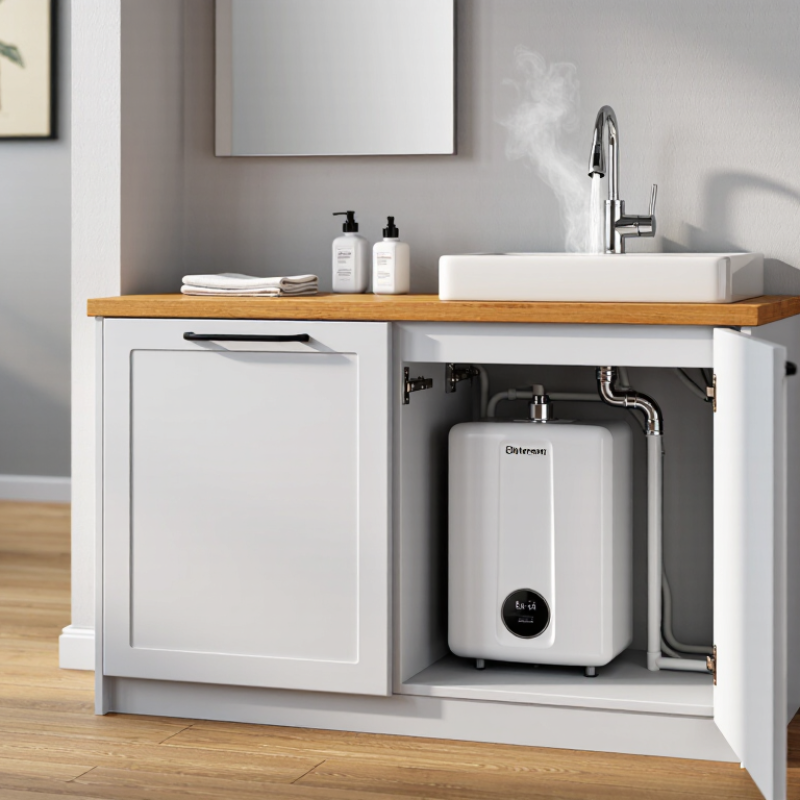
Why Choose a Water Mini Heater for Your Business?

What a Water Mini Heater Is

A water mini heater is a compact unit that heats water close to where it is used. It may hold a small volume in an insulated tank or heat water as it flows. A handwashing sink in a café kitchen, salon, or staff room is a typical use. The short distance can reduce waiting at the tap. Less waiting. It does not mean unlimited hot water: flow rate, incoming water temperature, and simultaneous demand still matter.

For context, the U.S. Energy Information Administration’s 2018 Commercial Buildings Energy Consumption Survey reports that water heating accounts for about 7% of commercial buildings’ energy use. That figure describes the broad building sector, not the savings any one mini heater will deliver. A site assessment should check peak demand, electrical or fuel capacity, installation space, and local operating patterns. For example, a sink used steadily during lunch service may need a different unit than one used occasionally. Compactness is useful, but sizing by appearance alone is a mistake. Even experienced operators can underestimate busy-hour demand.

How a Water Mini Heater Supplies Hot Water

A water mini heater supplies hot water close to where it is needed. Cold water enters through a narrow inlet. A heating element then raises its temperature inside a compact tank or heating chamber. When a tap opens, a thermostat or flow sensor activates the system. Hot water reaches the sink with less waiting and less pipe distance.

This design suits offices, cafés, clinics, and small service areas. The U.S. Department of Energy reports that water heating represents nearly 18% of household energy use. Although that figure is residential, it shows why repeated heating deserves attention in business operations. The International Energy Agency reported in 2023 that buildings consume about 30% of global final energy. Efficient local heating can reduce unnecessary circulation and standby losses.

The result feels simple. It is not always simple. A mini heater must match demand, flow rate, and incoming water temperature. A busy pantry may empty a small tank quickly. An instantaneous unit may struggle when several taps open together. Professional installation should verify electrical capacity, pressure, temperature control, drainage, and hygiene requirements. Insulation also matters, especially when the unit sits beneath a counter. In practice, the best performance comes from measured usage data, not guesswork. The DOE Energy Saver guidance supports choosing equipment according to demand and installation conditions, yet real businesses often underestimate peak usage. That mistake can create lukewarm water at the busiest moment.

Business Benefits of Choosing a Compact Heater

Why Choose a Water Mini Heater for Your Business?

A compact water heater can improve daily operations in surprisingly practical ways. In a café, warm water can support cleaning between busy orders. In a clinic, it can provide reliable handwashing near treatment rooms. In a small office, staff avoid waiting for distant sinks to heat. These small time savings can become meaningful during a full working day.

Business owners also gain flexibility from a smaller installation footprint. The unit may fit beneath a counter, inside a cabinet, or near a point of use. Shorter pipe runs can reduce water waiting time and limit heat loss. Lower water volume may also help control energy use, although actual savings depend on insulation, demand, and electricity rates. A qualified installer should check capacity, ventilation, wiring, and local safety requirements.

A compact heater is not perfect for every workplace. A busy restaurant may need more recovery power than one small unit provides. Some businesses may also underestimate maintenance access. That mistake can make routine servicing awkward. Choose a model with clear controls, accessible components, and suitable temperature protection. Keep records of inspections and test the water temperature regularly. Small details matter here. An overheated sink or neglected connection can disrupt work and create avoidable safety concerns. Experiences from daily use should guide the final choice, not size alone.

Why Choose a Water Mini Heater for Your Business?

Business benefits of choosing a compact, right-sized water heating solution

This chart uses the physical heating requirement for water: approximately 0.001163 kWh is needed to raise one litre of water by 1°C. The values assume a 40°C temperature increase and exclude standby and distribution losses. A compact heater can help businesses right-size capacity for lower-demand points of use, reducing unnecessary water heating and simplifying installation.

Key Factors to Consider Before Installation

Why Choose a Water Mini Heater for Your Business?

Before installation, assess your business’s actual hot-water demand. Count sinks, showers, staff areas, and peak usage periods. A unit that serves one handwashing sink may fail in a busy kitchen. Check flow rate, recovery speed, and available water temperature. Bigger is not always better.

The installation area also matters. Measure wall space, service clearance, pipe routes, and drainage access. Confirm that the electrical circuit can handle the heater’s rated load. A qualified installer should inspect wiring, pressure, ventilation, and local plumbing requirements. Water quality deserves attention too. Hard water can create mineral buildup and shorten component life. A filter or scheduled flushing may be necessary.

Tips: Keep the heater close to the point of use to reduce heat loss. Leave enough space for repairs. Record the installation date and service checks. Test water temperature before daily operation. Small oversights become expensive interruptions. A common mistake is choosing capacity from average demand alone. Peak demand often tells the real story. Review your usage after installation, because the first estimate may be imperfect.

Why Choose a Water Mini Heater for Your Business? - Key Factors to Consider Before Installation

Typical planning values for small commercial point-of-use water-heating applications. Actual performance depends on local codes, incoming water temperature, usage patterns, electrical capacity, and installation conditions.
Factor Typical Data or Range Why It Matters to a Business Installation Considerations Planning Recommendation
Best-Fit Applications Single sinks, hand-washing stations, small offices, restroom basins, kiosks, and remote service areas Provides hot water close to the point of use without extending long hot-water pipe runs. Confirm that the selected unit is intended for the required commercial or light-commercial duty cycle. Use a mini heater when demand is local, intermittent, and separated from the main hot-water system.
Storage Capacity Common compact tank sizes are approximately 2.5 to 20 gallons (9.5 to 76 liters) A larger tank supports longer or more frequent draws but requires more space and may have higher standby losses. Measure cabinet, wall, clearance, and service-access dimensions before ordering. Select capacity from peak simultaneous demand rather than average daily consumption.
Tankless Flow Rate Small point-of-use electric models commonly provide about 0.5 to 2.5 gallons per minute, depending on temperature rise and electrical input Tankless units can reduce standby losses, but their output falls as the required temperature rise increases. Verify incoming water temperature, desired outlet temperature, and minimum activation flow. Choose a storage unit when demand is intermittent or when the available electrical supply is limited.
Operating Temperature Many hand-washing systems are designed around approximately 100 to 120°F (38 to 49°C) at the fixture Lower delivery temperatures can reduce scald risk and energy use when they meet the application requirements. Use thermostatic mixing or tempering controls where required by local plumbing and safety regulations. Never increase the setpoint without reviewing scald protection and applicable codes.
Scald Protection Water at approximately 140°F (60°C) can cause severe burns quickly; risk increases as temperature rises Protects employees, customers, and visitors from avoidable hot-water injuries. Install approved temperature-limiting devices and test outlet temperature during commissioning. Set the final fixture temperature according to local regulations and the specific business use.
Electrical Demand Compact electric units often use approximately 1.4 to 5.5 kW; higher-power tankless units may require substantially more The electrical load affects installation cost, operating capacity, and whether an existing circuit can be used. Check voltage, amperage, circuit rating, grounding, disconnect requirements, and local electrical code. Have a qualified electrician verify available capacity before selecting the heater.
Approximate Current at 240 V A 3.0 kW heater draws about 12.5 A; a 5.5 kW heater draws about 22.9 A under full load Current requirements help determine conductor size, breaker rating, and panel capacity. Final circuit design must account for code requirements and the unit's rated load. Do not size wiring or protection devices from wattage alone; use the installation manual and local code.
Energy Use Heating 1 gallon of water by 60°F requires roughly 500 BTU, or about 0.15 kWh, before system losses Energy cost depends mainly on water volume, temperature rise, usage frequency, efficiency, and local electricity rates. Insulate accessible hot-water piping and avoid unnecessarily high storage temperatures. Estimate costs from measured or expected gallons per day and the local utility tariff.
Recovery Time A small electric tank may need roughly 30 to 90 minutes to fully reheat after a substantial draw, depending on capacity and wattage Recovery affects whether the heater can support consecutive users during busy periods. Compare peak demand with the heater's recovery rating, not only its tank volume. Use a larger tank, higher input, or a different system when back-to-back demand is expected.
Water Quality and Scale Hard water can cause mineral scale on heating elements, valves, and tank surfaces Scale can reduce heat transfer, increase energy use, restrict flow, and shorten service intervals. Review local water hardness and follow the manufacturer's cleaning or descaling schedule. Consider filtration, treatment, or more frequent maintenance where hardness is high.
Plumbing Distance Longer hot-water runs increase waiting time, heat loss, and water wasted while the line clears A point-of-use heater can improve response time at a remote fixture. Install close to the fixture while maintaining required service clearances and protection from freezing. Compare the heater cost with the cost of extending, insulating, and maintaining a hot-water line.
Maintenance Typical tasks include leak inspection, valve testing, temperature checks, anode inspection for applicable tanks, and descaling where needed Routine maintenance supports safe operation and helps prevent unplanned downtime. Provide accessible shutoff valves, drainage, electrical isolation, and service clearance. Include maintenance labor and replacement parts in the total ownership budget.
Safety and Compliance Requirements may cover plumbing, electrical, pressure relief, temperature control, drainage, and accessibility Non-compliant installation can create safety risks, failed inspections, liability, and operational delays. Check current local building, plumbing, electrical, workplace, and water-safety requirements. Use licensed professionals for installation and obtain permits where required.
Space and Mounting Compact models may be installed under a sink, beside a fixture, or on a wall when the design permits Small dimensions can preserve valuable commercial floor and storage space. Confirm unit orientation, structural support, ventilation requirements, access, and clearance zones. Prioritize service access over minimum footprint when selecting the installation location.
Total Cost of Ownership Cost includes equipment, electrical work, plumbing, permits, controls, maintenance, energy, and eventual replacement The lowest purchase price may not provide the lowest long-term operating cost. Request an installation quote that separates equipment, labor, controls, and code-related upgrades. Compare options using expected service life, annual energy use, maintenance, and downtime risk.

Business Types That Can Benefit from Mini Heaters

Small cafes, salons, clinics, and compact offices often need hot water near one workstation. A water mini heater can serve a handwashing sink without heating an entire building. This suits cafes with a distant kitchen, salons rinsing towels, and clinics needing quick sink access. The U.S. Energy Information Administration’s 2018 Commercial Buildings Energy Consumption Survey reported that water heating represented about 7% of commercial building energy use. Local heating may reduce pipe losses, especially in low-use areas.

Guesthouses, workshops, childcare facilities, and small retail stores can also benefit. A workshop may need warm water for cleaning tools, while a guesthouse may require faster service between occupied rooms. The U.S. Department of Energy notes that demand for hot water varies sharply by building type and usage schedule. That makes careful sizing essential. Oversizing creates unnecessary standby consumption.

Real operating conditions matter. Staff may wait less when hot water is available beside the sink. Yet a mini heater is not a universal fix. Electrical capacity, water pressure, temperature control, and maintenance access need professional review. The 2023 ASHRAE Handbook emphasizes matching water-heating equipment to demand patterns, not simply choosing the largest unit. A small unit can fail during peak periods. That mistake is easy to underestimate. Track morning demand for several days before installation, then compare actual usage with the heater’s rated recovery time. Reports provide useful averages, but each business has inconvenient differences.

FAQS

What businesses may benefit from a compact water heater?

Small cafés, salons, clinics, offices, guesthouses, workshops, childcare facilities, and retail stores may need hot water near one sink or workstation.

How can a compact heater save staff time?

Staff can wash hands or rinse towels without waiting for water from a distant heater. A few minutes saved repeatedly can matter. Not always.

Where can a compact heater be installed?

It may fit beneath a counter, inside a cabinet, or near a point of use. Check that maintenance access remains clear.

Can a smaller heater reduce energy use?

Shorter pipe runs may reduce heat loss, and heating less water may help. Actual savings depend on demand, insulation, and electricity rates.

How should a business choose the right capacity?

Track hot-water use during busy periods for several days. Compare demand with the unit’s recovery time, and ask a qualified installer to review the setup.

Is one compact heater suitable for every workplace?

No. A busy restaurant may need more recovery power than one small unit can provide. Peak demand is easy to underestimate.

What should an installer check before setup?

They should review capacity, wiring, water pressure, ventilation, temperature control, and maintenance access. Fit matters.

What routine checks can help prevent problems?

Keep inspection records and check water temperature regularly. Inaccessible parts can make servicing awkward, so reconsider the layout if needed.

Conclusion

A Water Mini Heater is a compact system designed to provide hot water close to the point of use, making it a practical option for businesses with limited space or moderate hot-water demand. It heats water through an internal heating element or similar mechanism and delivers it quickly to sinks, wash areas, kitchens, offices, and service rooms. By reducing the distance water must travel, it can help shorten waiting times and limit heat loss in the supply line.

For businesses, a compact heater may support energy efficiency, easier installation, and more flexible space planning. Before installation, it is important to consider water usage, electrical capacity, available mounting space, safety requirements, maintenance access, and local installation standards. Mini heaters can benefit offices, cafés, small restaurants, salons, clinics, retail stores, workshops, and rental facilities that need reliable hot water without installing a large centralized system. Selecting the right capacity and placing the unit near the main usage point can improve convenience and operating performance.


Ethan

Ethan

Ethan is a seasoned marketing professional with a deep expertise in our company's innovative product line. With a passion for sharing knowledge and insights, he takes the lead in regularly updating our corporate blog, where he explores industry trends, product features, and effective marketing......