Choosing a House Water Heater is no longer a simple decision between gas and electricity. Buyers must compare climate, fuel access, water demand, installation space, maintenance, and local efficiency standards. A compact apartment in Singapore needs a different solution from a large villa in Canada. The same model may perform differently under hard water, cold inlet temperatures, or unstable electricity supplies.
The U.S. Department of Energy reports that water heating represents about 18% of household energy use. ENERGY STAR also states that certified heat pump water heaters can use around 70% less energy than conventional electric models. These figures explain why storage, tankless, solar, and heat pump systems deserve careful comparison. The International Energy Agency’s The Future of Heat Pumps report further highlights heat pumps as an important route for reducing fossil-fuel consumption in buildings. Performance still depends on correct sizing and installation.
Real-world experience matters. A household with four daily showers may value recovery speed more than maximum efficiency. A hotel may need recirculation control, redundancy, and stronger service support. A rural buyer may prioritize solar compatibility or easy parts replacement. No list can fit every household. Market reports often combine different regions and product definitions, so their projections require careful interpretation. This guide reviews ten major House Water Heater types through practical criteria, including energy performance, purchase cost, operating conditions, lifespan, safety features, and maintenance demands. It also considers evolving refrigerant rules and electrical requirements. The best choice is rarely the newest product. It is the system that reliably matches local conditions, household habits, and long-term ownership goals.
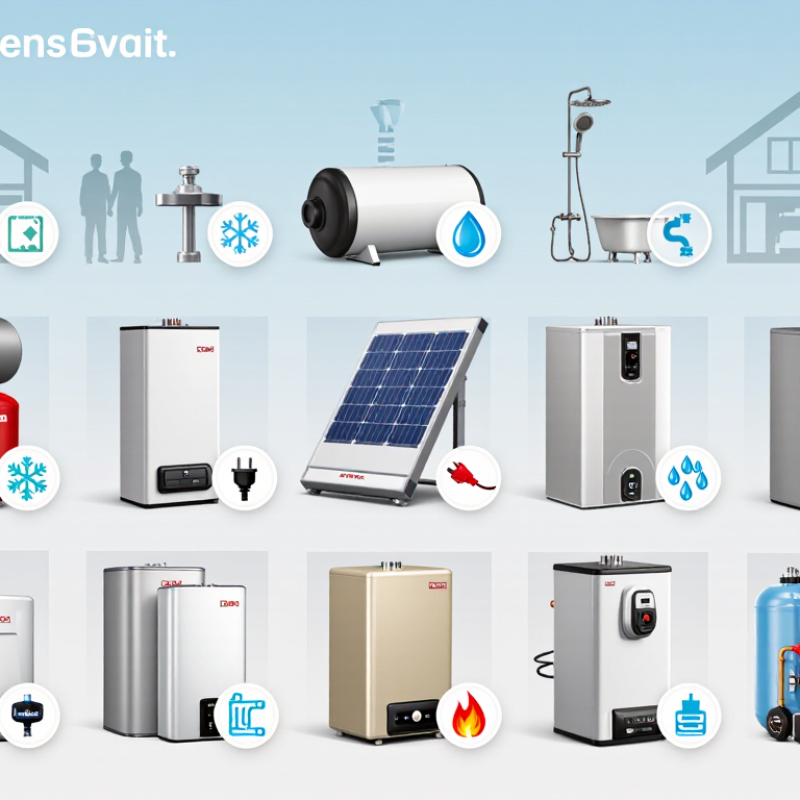
A house water heater is an appliance that heats and supplies water for showers, washing, cooking, and cleaning. It may use electricity, gas, solar energy, or heat from the surrounding air. Common types include storage-tank, tankless, heat-pump, solar, condensing, indirect, and point-of-use systems. Each design manages heat differently.
The type matters because household demand is never identical. A 200-liter storage tank can serve several showers, but it needs floor space and standby energy. A tankless unit saves space, yet its flow rate may fall during two simultaneous showers. Heat-pump models can reduce electricity use, although they need airflow and produce a low operating hum. Solar systems perform well in sunny regions but often need backup heating during cloudy weeks.
A reliable selection begins with real measurements. Check family size, peak shower times, incoming water temperature, fuel availability, local climate, and installation space. Pipe distance matters too. A point-of-use heater near a kitchen sink can reduce waiting and water waste. Venting and electrical capacity require professional inspection.
In practical assessments, oversized tanks often waste energy, while undersized units create unhappy mornings. That sounds obvious. It still happens. Efficiency labels help, but they cannot replace local operating data. The cheapest purchase may also bring higher maintenance, slower recovery, or difficult repairs. A thoughtful choice balances comfort, safety, running cost, service access, and expected household changes.
| Water Heater Type | How It Works | Typical Energy Source | Storage Profile | Typical Efficiency Indicator | Main Advantages | Key Limitations | Best-Suited Applications |
|---|---|---|---|---|---|---|---|
| 1. Conventional Storage Gas | A burner heats water in an insulated tank. The stored water is maintained near the selected temperature between uses. | Natural gasLPG | Usually 75–300 litres for residential installations. | Typical residential energy factors are approximately 0.55–0.70 for non-condensing models; actual performance varies by fuel and test standard. | Familiar technology; good recovery rate; can supply several outlets at the same time; works during power interruptions if controls allow. | Standby heat loss; requires safe combustion-air supply and flue ventilation; gas connection and exhaust installation may be necessary. | Homes with an existing gas supply, moderate-to-high hot-water demand, and adequate ventilation space. |
| 2. Conventional Storage Electric | Immersion heating elements warm water inside an insulated tank. Thermostats cycle the elements to maintain temperature. | Grid electricitySolar-generated electricity | Usually 50–300 litres for residential installations. | Often a uniform energy factor of about 0.90–0.95, although total operating cost depends strongly on electricity tariffs and standby losses. | Simple installation; no combustion gases; comparatively low purchase cost; suitable for apartments and locations without gas service. | Tank standby losses; limited continuous output; high operating cost where electricity is expensive; may require substantial electrical capacity. | Small to medium households, apartments, and homes where electricity is the most accessible energy source. |
| 3. Non-Condensing Gas Tankless | A gas burner heats water through a heat exchanger only when a tap or shower calls for hot water. | Natural gasLPG | No storage tank; continuous flow is limited by burner capacity and incoming-water temperature. | Common residential uniform energy factor range: approximately 0.80–0.85. | Low standby loss; compact wall-mounted design; long service life when maintained; suitable for repeated hot-water use. | Requires gas piping, combustion air, and venting; output can fall in cold climates or when several outlets operate simultaneously; minimum flow may be required. | Homes with gas service, limited installation space, and a preference for on-demand heating. |
| 4. Electric Tankless | High-power electrical elements heat water as it passes through the unit, without storing a large volume of hot water. | Grid electricityRenewable electricity | No storage tank; flow depends on electrical power and the required temperature rise. | Point-of-use units can approach 0.95–0.99 uniform energy factor; whole-house performance depends on sizing and usage. | Compact; no flue or combustion emissions; low standby loss; useful where gas service is unavailable. | Whole-house models can require high electrical current and upgraded wiring; flow may be limited in cold incoming-water conditions; operating cost can be high. | Point-of-use supply, small dwellings, remote rooms, and homes with sufficient electrical capacity. |
| 5. Heat Pump Water Heater | Uses a refrigeration cycle to move heat from surrounding air into the water tank, rather than creating heat directly. | Electricity | Common residential tank sizes are approximately 150–300 litres. | Uniform energy factor is commonly about 2.5–4.0, meaning it can deliver several units of heat for each unit of electricity under rated conditions. | Very low operating energy use; can reduce water-heating electricity consumption substantially compared with standard electric resistance tanks; may provide mild dehumidification. | Higher purchase price; slower recovery in some operating modes; requires adequate surrounding air volume, drainage, and acceptable ambient temperature. | Warm or moderate climates, energy-conscious households, and homes with suitable utility-room space. |
| 6. Solar Thermal Water Heater | Solar collectors transfer heat to water directly or to a separate heat-transfer fluid, with a storage tank supplying hot water when sunlight is unavailable. | Solar energyElectric or gas backup | Usually includes a dedicated storage tank, often 150–400 litres for a home system. | Performance is commonly expressed as solar fraction rather than a single efficiency value; annual solar contribution may range from about 40% to 80%, depending on climate, collector area, orientation, and demand. | Low operating emissions; can substantially reduce purchased energy; particularly effective in sunny regions. | High upfront and installation cost; roof orientation and shading matter; backup heating is needed during cloudy periods; freeze protection may be required. | Sunny climates, detached homes with suitable roofs, and projects prioritizing long-term renewable-energy use. |
| 7. Condensing Gas Water Heater | Uses a secondary heat exchanger to recover heat from water vapour in combustion exhaust before the gases leave the appliance. | Natural gasLPG | Available as storage-tank or tankless configurations; storage models commonly range from 150–300 litres. | Typical uniform energy factor is approximately 0.90–0.98, depending on the configuration and operating conditions. | Higher fuel efficiency than conventional non-condensing gas equipment; reduced flue-gas temperature; suitable for high-demand households. | Higher initial cost; produces acidic condensate that must be drained; requires compatible vent materials and professional installation. | Homes with gas service, high hot-water demand, and a priority on reducing fuel consumption. |
| 8. Indirect Water Heater | A separate boiler or central heating system heats a fluid that passes through a heat exchanger inside the hot-water storage tank. | Gas boilerOil boilerElectric boilerHeat network | Typically 150–300 litres, with the tank heated by an external source. | There is no single standalone efficiency rating; seasonal performance is closely linked to the efficiency of the connected boiler or heat source and the tank’s insulation. | Can provide strong recovery; integrates water heating with space heating; fewer direct combustion components at the storage tank. | Requires a compatible boiler or heat source; installation is more complex; performance may be less attractive in homes that do not need central heating. | Cold-climate homes with an existing boiler, central heating loop, or hydronic heating system. |
| 9. Point-of-Use Water Heater | A small heater is installed close to a sink, shower, or appliance to reduce the distance hot water must travel through the pipework. | ElectricityGas in selected applications | Tank models commonly hold 5–30 litres; tankless models have no storage. | Efficiency depends on the design; small electric tankless units can approach 0.95–0.99 uniform energy factor, while tank units experience some standby loss. | Reduces waiting time and water waste; compact; useful for remote fixtures and localized demand. | Usually cannot supply an entire home; multiple units may be needed; electrical load and maintenance access must be considered. | Remote bathrooms, kitchen sinks, offices, guest rooms, and buildings with long hot-water pipe runs. |
| 10. Combi Boiler with Domestic Hot Water | A single boiler provides space heating and heats domestic water directly, usually through a plate heat exchanger when hot water is requested. | Natural gasLPGElectricity | Normally tankless for domestic hot water, although some systems include a small internal buffer or hot-water store. | Modern condensing units commonly achieve approximately 0.90–0.98 seasonal or rated efficiency, depending on local test procedures and system design. | Saves space; no separate hot-water tank is normally required; provides hot water and space heating from one appliance. | Simultaneous demand can reduce flow temperature or pressure; requires correct sizing; may be unsuitable where several bathrooms operate at once without a storage option. | Compact homes and apartments with a central heating requirement and moderate, predictable hot-water demand. |
A compact electric storage unit may fit limited space and moderate demand. A tankless electric model can save floor space. Measure available airflow and electrical capacity first. Space changes everything.
Larger homes often need higher recovery rates and several simultaneous outlets. Storage tanks provide steady hot water. Hybrid systems can balance recovery speed and operating costs. Oversizing still wastes money.
They usually perform best in mild or warm climates. They need airflow, floor space, and suitable temperatures. Cold conditions can reduce practical performance. Check local climate data before buying.
Solar heating suits homes with strong sunlight and suitable roof or ground space. Cloudy periods may require backup heating. Consider winter output, storage, and maintenance access. Sunny does not mean constant.
Confirm fuel availability, approved ventilation, and combustion-air requirements. Gas systems may recover heat quickly. Installation quality remains critical. Never treat ventilation as a minor detail.
Minerals can build up inside heating elements, valves, and tankless passages. This may reduce performance and shorten equipment life. Ask about filtration, softening, and cleaning needs. Hard water is easy to underestimate.
Check local voltage, tested efficiency, recovery rate, noise, drainage, and safety certification. Ask whether test conditions match your climate and water quality. Confirm spare parts and technician availability. A long warranty may not help without service.
Estimate peak demand, not only daily average use. Count showers, sinks, and appliances used together. A small family may waste money on oversized equipment. A large family may regret choosing a compact model. Habits matter more than advertisements.
Choosing the right House Water Heater is an important decision because the system affects daily comfort, energy use, installation requirements, and long-term household costs. The main types include storage tank, tankless, heat pump, solar, electric, gas, condensing, indirect, point-of-use, and hybrid systems. Each works differently: some store and heat water in advance, while others produce hot water on demand or transfer heat from the surrounding air. Understanding these differences helps buyers compare energy sources, efficiency, heating capacity, maintenance needs, purchase price, and operating expenses.
The best choice depends on household size, water-use habits, available space, local climate, fuel access, and regional installation conditions. Buyers in cold areas may prioritize reliable capacity, while those in sunny or energy-conscious regions may consider renewable options. Before purchasing, global buyers should check voltage, fuel compatibility, plumbing connections, climate performance, safety features, warranty terms, maintenance support, local regulations, and total ownership cost. A careful comparison ensures the selected system provides dependable hot water and practical efficiency for the home.

 Huayida