What Is the Best Watt Water Heater in 2026? The answer is not found in wattage alone. A higher rating may heat water faster, but it can also demand heavier wiring, higher installation costs, and more careful circuit planning. A lower-rated unit may work well in a small apartment, especially with a low-flow showerhead and modest daily use. Real performance depends on tank size, voltage, insulation, incoming water temperature, and household habits.
Gary Klein, P.E., a respected water-heating efficiency expert, has said, “The goal is delivering hot water, not merely heating it.” That idea guides this comparison. A 3,000-watt model may suit one person. A 4,500-watt unit often fits a small family. Larger households may need faster recovery, multiple heating elements, or a heat-pump design rather than simply more watts. The best Watt Water Heater should match demand safely and efficiently.
Look beyond the label.
This guide examines recovery speed, energy use, wiring requirements, operating noise, maintenance, and long-term value. It also considers practical details, such as a cold morning shower, a half-empty tank, or two appliances running together. Some recommendations will remain imperfect. Energy prices vary. Household routines change. Manufacturer ratings may not reflect every home.
That uncertainty matters. Choosing a Watt Water Heater requires measured judgment, not the biggest number on a product page. The right model should provide dependable hot water without creating unnecessary electrical load or avoidable expense.
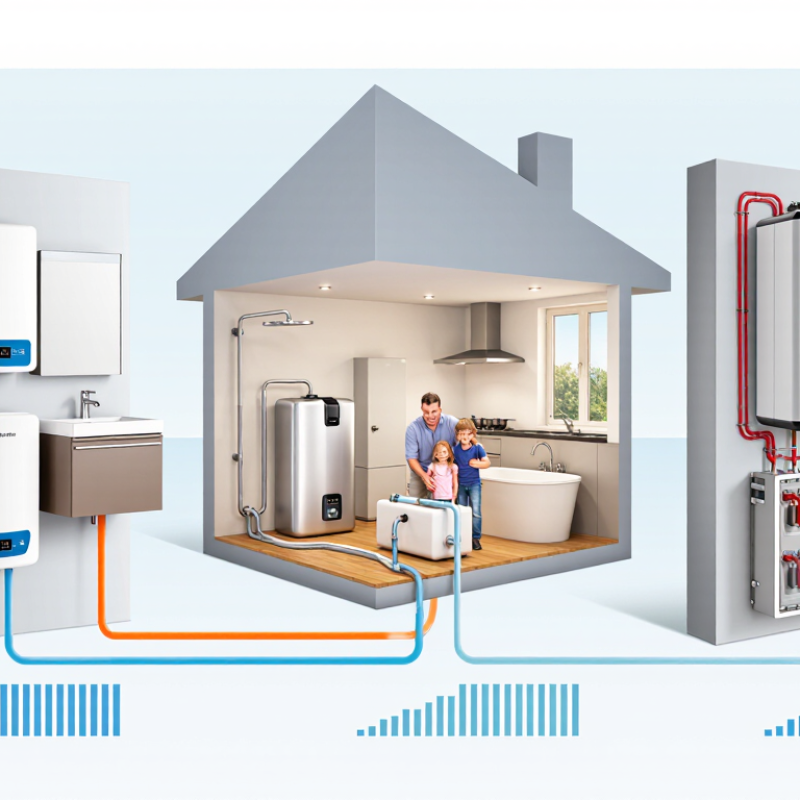
What Is the Best Watt Water Heater in 2026?
What Wattage Means in a Water Heater
Wattage shows how quickly a water heater can convert electricity into heat. A 4,500-watt element heats water faster than a 3,000-watt element. However, higher wattage also demands more electrical capacity.
A storage heater with two 4,500-watt elements may not use both continuously. Many models alternate between elements to protect the circuit and maintain temperature. A tankless unit can require much more power because it heats water instantly. For example, a small tankless heater may need 12,000 watts, while a larger unit can exceed 24,000 watts.
Wattage is not the same as total energy use. A powerful heater may run for fewer minutes. A weaker heater may run longer. Your household size, incoming water temperature, tank capacity, and shower habits all affect electricity consumption. This is where many buying guides oversimplify the decision.
A practical check starts with the electrical panel. A 4,500-watt heater at 240 volts draws about 18.75 amps. The circuit, wiring, breaker, and installation method must support that load. Never choose wattage by comparing numbers alone. A qualified electrician should verify the circuit before installation.
I used to view higher wattage as automatically better. That assumption was incomplete. A larger element can improve recovery, but it may provide little benefit in a small household with moderate demand. The best wattage is the one that matches your water use and electrical system, not simply the highest available.
| Heater Configuration | Typical Tank Capacity | Rated Wattage | Nominal Voltage | Approx. Current | Approx. Recovery at a 90°F Temperature Rise | Typical Application | What the Wattage Means |
|---|---|---|---|---|---|---|---|
| Point-of-use electric tank | 2–6 gal | 1,440–1,500 W | 120 V | 12.0–12.5 A | About 6.0–6.4 gal/hour | One sink, handwashing station, or remote fixture | Lower power demand and simple voltage requirements, but limited hot-water volume and slower recovery. |
| Compact electric tank | 10–20 gal | 1,500–2,000 W | 120 V | 12.5–16.7 A | About 6.4–8.5 gal/hour | Small apartment, office, cabin, or low-demand household | Suitable where a 120-volt circuit is available, although recovery is generally slower than a 240-volt unit. |
| Standard electric tank | 30–40 gal | 3,000–4,500 W | 240 V | 12.5–18.8 A | About 12.8–19.2 gal/hour | One- to two-person household with moderate demand | More wattage transfers heat to the water faster and helps shorten recovery time after a large draw. |
| High-recovery electric tank | 40–50 gal | 4,500 W | 240 V | 18.8 A | About 19.2 gal/hour | Two- to three-person household with regular showers and appliance use | A balanced choice for many homes because it combines commonly available tank sizes with faster recovery than lower-wattage models. |
| Large electric tank | 50–80 gal | 4,500–5,500 W | 240 V | 18.8–22.9 A | About 19.2–23.5 gal/hour | Three- to five-person household or high hot-water demand | Higher wattage improves recovery, but the electrical circuit, disconnect, and installation must be sized for the equipment. |
| Electric tankless, single-point | Tankless | 3,500–8,000 W | 120–240 V | 15–33.3 A | Continuous flow depends on inlet temperature and flow rate | One fixture with intermittent use | Power is used only while water flows. Lower wattage limits flow, especially when the incoming water is cold. |
| Whole-home electric tankless | Tankless | 18,000–36,000 W | 240 V | 75–150 A | Continuous flow varies widely with temperature rise | Multiple fixtures where the electrical service supports the load | High wattage can provide stronger simultaneous flow, but it may require multiple circuits and substantial electrical capacity. |
| Technical note: Approximate recovery figures use the water-heating relationship that 1 watt equals 3.412 BTU per hour and assume a 90°F temperature rise with no standby or distribution losses. Actual performance varies with inlet-water temperature, thermostat setting, insulation, flow rate, and operating conditions. Actual circuit requirements must be confirmed from the heater's installation instructions and local electrical code. | |||||||
Wattage shows how quickly electricity becomes heat. A 4,500-watt element heats water faster than a 3,000-watt element. Higher wattage also needs greater electrical capacity. Faster is not always better.
No. The best wattage matches household demand and the electrical system. A small household may gain little from an oversized element. I once assumed higher wattage was automatically better. That judgment was incomplete.
It draws 4.5 kilowatts during active heating. At 240 volts, it draws about 18.75 amps. Actual energy use depends on runtime. Insulation, water temperature, and shower habits matter.
Not necessarily. A stronger heater may run for fewer minutes. A weaker heater may run longer. For example, 3,000 watts can use similar energy to 1,500 watts when heating the same water volume. Heat losses still affect the final cost.
A 3,000–4,500-watt tank may suit two people with moderate use. Consider tank size and evening shower timing. Heavy use can still cause slow recovery. Track your routine for three days.
Larger households often need faster recovery or a larger tank. A 4,500-watt or 5,500-watt element may help. However, the circuit must support it. More power cannot fix an undersized tank.
Heating 50 liters by 40°C requires about 2.3 kilowatt-hours before heat losses. A higher-wattage unit finishes sooner. The total energy can remain similar. That detail is easy to overlook.
Check voltage, wiring, breaker size, and panel capacity. A 5,500-watt element at 240 volts draws nearly 23 amps. Never compare wattage numbers alone. A qualified electrician should verify the installation.
Tankless heaters can need much higher power for instant heating. Small units may require around 12,000 watts. Larger units can exceed 24,000 watts. They may reduce standby losses, but electrical demands can be substantial.
Yes, if the space has suitable airflow and temperature. Some units use roughly 700–1,000 watts while producing more heat efficiently. They may heat differently from resistance models. I once ignored installation space. That was a poor comparison.
Choosing the best Watt Water Heater in 2026 starts with understanding how wattage affects heating power, recovery speed, energy use, and operating cost. Higher wattage can heat water faster, but it may also increase electricity consumption and require suitable household wiring. The right choice depends on tank size, daily hot water demand, climate, and the number of people using hot water at the same time.
Smaller tanks and homes with light usage may work well with lower wattage, while larger households often benefit from higher wattage for quicker recovery between showers and other tasks. However, maximum wattage is not always the best option. A balanced choice should provide reliable heating without unnecessary energy costs. By comparing common wattage levels, estimating usage patterns, and checking electrical capacity, homeowners can select a water heater that offers the best combination of comfort, efficiency, heating speed, and long-term value.

 Huayida