2026 Top Copper Wire Heater Types for Global Buyers

Time:2026-11-10 Author:Amelia
0%

Choosing a Copper Wire Heater in 2026 starts with a clear view of the job it must do. The term can describe different constructions, from copper conductors paired with resistance-alloy heating elements to insulated heating cables and custom coil assemblies. These designs are not interchangeable. A compact heater for a sensor enclosure has different needs from a long cable warming a pipe or tank.

The category name can be confusing. Copper conducts electricity and heat efficiently, but it is not usually the resistance material that generates heat in industrial elements. Buyers should check the construction drawing, conductor material, insulation, rated voltage, operating temperature, and mounting method. Small details matter: a tight bend, damp surroundings, or limited clearance can affect service life and installation. Ask suppliers for datasheets, test records, and samples where practical. Compare those records with the actual duty cycle, not just the headline wattage. Not every listing explains its limits clearly, so pause when key specifications are missing.

This guide reviews common heater types and the applications they suit, while noting where designs differ. It also outlines practical questions for evaluating suppliers across markets, including documentation and region-specific certification needs. A heater that works well in one setup may perform poorly in another. That is easy to overlook. A careful comparison helps buyers balance heat output, durability, installation needs, and total operating cost without relying on a product label alone.
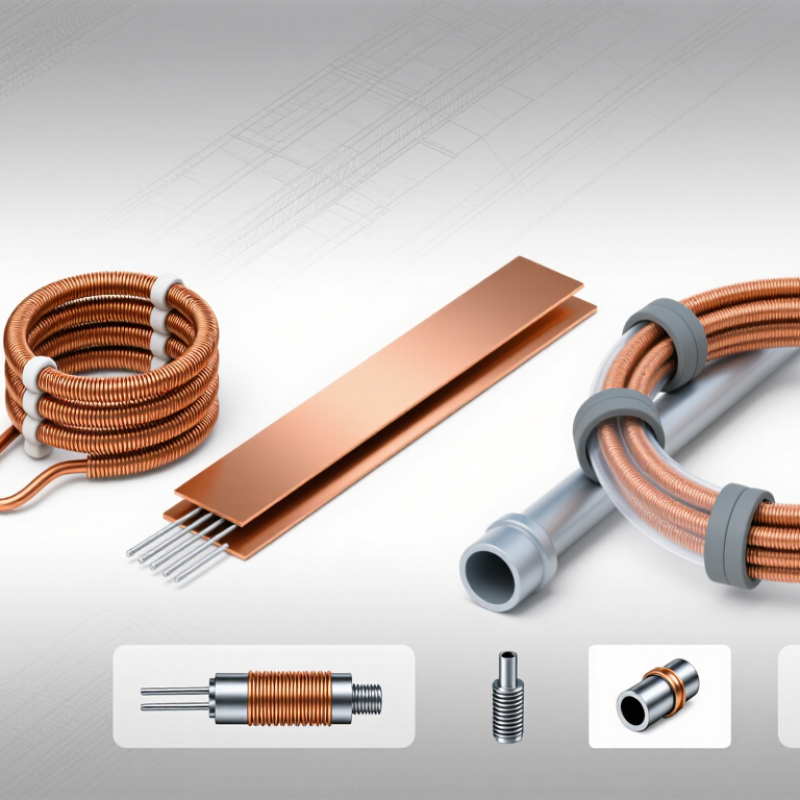
2026 Top Copper Wire Heater Types for Global Buyers

How Copper Wire Heaters Generate and Transfer Heat

Copper wire heaters work through electrical resistance. When current passes through a resistive path, some electrical energy becomes heat; the rate depends on current and resistance. Copper conducts electricity and heat very well, so it often serves as a lead or heat-spreading layer rather than the hottest element. In some assemblies, a higher-resistance wire creates the heat, while copper helps carry current or distribute warmth. Details vary by construction.

Heat then moves from the wire into nearby materials by conduction. Air around the assembly warms by convection, while exposed hot surfaces also radiate energy. A ceramic support or insulated channel can shape the heat path and limit unwanted losses. Small changes matter. Wire spacing, contact pressure, and airflow can create warm and cool spots. I would not assume the copper wire’s temperature alone describes the heater’s output; measure the surface or process area under real operating conditions.

Tips: Check current, voltage, and resistance together, and follow the heater’s rated limits. Keep connections tight and insulation intact. A loose joint can heat locally. Allow airflow where the design requires it, and use a suitable sensor near the target surface. Readings can still miss hidden hotspots, so inspect the full assembly during testing.

Copper Wire Heating: Resistance and Heat Generation by Wire Gauge

At the same current, a thinner copper wire generates more resistive heat per meter (P = I²R). Values below use standard AWG copper-wire resistance at 20°C and a constant 5 A current.

Calculated heat generation: AWG 14 ≈ 0.207 W/m, AWG 16 ≈ 0.329 W/m, AWG 18 ≈ 0.524 W/m, and AWG 20 ≈ 0.833 W/m. Actual wire temperature depends on insulation, installation, ambient conditions, and heat dissipation. Copper wire is typically used as a conductor rather than a dedicated resistance-heating element.

Main Copper Wire Heater Types and Their Construction

2026 Top Copper Wire Heater Types for Global Buyers

Main Copper Wire Heater Types and Their Construction

The term “copper wire heater” can be imprecise. In many heater assemblies, copper carries current through lead wires, while a higher-resistance alloy creates the heat. That distinction matters when comparing products or requesting a replacement.

A mica band heater typically places resistance wire between mica sheets, then secures the layers inside a metal shell. Copper leads connect the assembly to its power supply. The band clamps around a barrel or pipe, so buyers should check its inner diameter, wattage, and contact fit. A loose fit can reduce heat transfer.

Cartridge heaters use a resistance coil around a ceramic core, enclosed in a metal sheath. Copper lead wires extend from one end, and the cartridge slides into a drilled hole. Tubular heaters also use an internal resistance element, often insulated with compacted mineral material inside a metal tube. Their shape can be bent for specific equipment, but not without limits. Ask suppliers to identify the heating element material, insulation, operating temperature, and lead-wire construction. Specifications can vary, and the product name alone may not reveal what actually heats.

2026 Top Copper Wire Heater Types for Global Buyers - Main Copper Wire Heater Types and Their Construction

Heater Type Main Construction How Heat Is Produced Typical Applications Key Buyer Considerations
Induction Heating Coil Insulated copper tubing or heavy copper conductor formed into a coil, often with water cooling and electrical insulation between turns. Alternating current in the coil creates a changing magnetic field that induces heat in a conductive workpiece. The copper coil is primarily the conductor, not the workpiece-heating element. Metal hardening, brazing, forging, billet heating, and localized heating of conductive parts. Check workpiece material and dimensions, operating frequency, coil geometry, cooling requirements, and power supply compatibility.
Copper-Wound Resistance Heater Assembly Copper wire is used for leads or windings connected to a separate resistance element, commonly a nickel-chromium or iron-chromium-aluminium alloy wire or strip, supported by ceramic or another heat-resistant insulator. The resistance alloy converts electrical energy into heat; the copper winding or leads carry current to the active element. Industrial ovens, air heaters, process equipment, and replacement heater assemblies. Confirm the active element material, voltage, wattage, insulation temperature rating, and terminal design. Do not assume the copper conductor itself is the heating element.
Copper-Sheathed Tubular Heater with Internal Resistance Wire A resistance-alloy wire is centered inside a metal sheath, including copper in some designs, and electrically isolated by compacted magnesium oxide or another suitable dielectric. The internal resistance wire generates heat, which transfers through the electrical insulation and sheath to the surrounding medium. Liquid heating, equipment heating, and selected low-temperature or corrosion-compatible applications. Verify sheath compatibility with the fluid, operating temperature, pressure, watt density, grounding, and applicable electrical approvals. Copper sheaths are not suitable for every fluid or temperature.
Low-Voltage Bare Copper Wire Joule Heater Bare copper wire is arranged as a conductive path and connected to a suitably controlled low-voltage, high-current source, with supports and guarding as required. Electrical resistance in the copper produces heat. Because copper has low electrical resistivity, substantial current may be needed for useful heating. Specialized laboratory demonstrations, experimental assemblies, and limited-purpose low-voltage heating systems. Assess current capacity, wire length and cross-section, contact resistance, temperature rise, and short-circuit protection. This is generally not interchangeable with a conventional resistance-alloy heater.
Copper Conductor in Flexible or Surface-Heater Wiring Copper conductors provide electrical connections to a separate heating track or resistive element within a flexible, insulated assembly. The dedicated heating track produces heat; copper conductors deliver current to it. Pipe and vessel temperature maintenance, equipment protection, and flexible surface-heating assemblies. Check the specified heating element, insulation and jacket materials, bend radius, environmental rating, control method, and installation requirements.

Technical note: Copper is an excellent electrical conductor but has much lower electrical resistance than common resistance-heating alloys. In many heater designs, copper wire serves as a conductor or induction coil, while a separate resistance element or the heated workpiece produces the useful heat.

Key Materials, Temperature Ranges, and Performance Factors

Copper-wire heaters use copper in different ways: as an induction coil, a current-carrying winding, or a conductor paired with a separate resistive element. Copper is not usually the heating resistance itself. That distinction matters. Copper Development Association technical data gives annealed copper electrical conductivity as about 100% IACS, or 58 MS/m, at 20°C; its thermal conductivity is about 401 W/m·K. These properties help move current and heat efficiently, but also make insulation and electrical connections critical.

Temperature limits depend on the whole assembly, not just the metal. NIST lists copper’s melting point as 1084.6°C, but insulation, terminals, and nearby materials normally set a much lower operating limit. IEC 60085 thermal classes include 155°C, 180°C, 200°C, and 220°C; these classify insulation systems, not guaranteed heater operating temperatures. A tightly wound coil may develop hot spots where turns touch or cooling is uneven. Small details matter.

Tips: Check the insulation’s thermal class and measure temperature at the hottest point under load. Keep coil spacing consistent, inspect joints for discoloration, and allow for airflow or cooling. A rating on paper is not a substitute for testing.

Common Applications Across Global Industries

Copper-wire heater assemblies appear in HVAC equipment, refrigeration, vehicle cabins, and industrial machines. Copper usually carries current or spreads heat; the resistive element is often a higher-resistance alloy or conductive trace. That distinction matters. A copper conductor alone may draw excessive current rather than provide controlled heating.

In factories, heaters support drying, curing, tank warming, and temperature control for process equipment. The U.S. Department of Energy’s Advanced Manufacturing Office estimates process heating accounts for about 36% of energy used in U.S. manufacturing.

Small spaces matter. In appliances and refrigeration systems, compact wire-based heaters can prevent frost on drain lines or warm narrow surfaces. Vehicles use electric heaters for seats, mirrors, and cabin components; the IEA reported nearly 14 million electric car sales in 2023, about 18% of global car sales. This points to a growing setting for electrical thermal components, though it does not measure heater demand directly.

Selection still depends on voltage, insulation, airflow, and operating temperature. Not every design fits. Field maintenance can also reveal weak spots, such as loose terminals or uneven heating, that a laboratory test may miss.

How Buyers Compare Specifications, Safety Standards, and Suppliers

2026 Top Copper Wire Heater Types for Global Buyers

When comparing copper wire heater types, clarify what “copper wire” describes. In many designs, copper carries current through leads, while a higher-resistance alloy forms the heating coil. That distinction matters. Ask for a wiring diagram and confirm the heating element material. Compare rated voltage, wattage, wire diameter, insulation, operating temperature, and duty cycle against your equipment’s actual conditions. A heater that fits physically may still overheat in a cramped enclosure.

Safety requirements depend on the destination market and the finished product. Buyers should request applicable test reports, insulation details, over-temperature protection information, and clear installation limits. Check whether ratings apply to the complete heater or only a component. That detail is easy to miss. Also ask how the supplier verifies temperature rise under representative loads, rather than relying on a no-load demonstration.

Supplier evaluation should include traceability, production controls, and consistent documentation. Request material specifications, inspection records, and sample test results for the exact configuration being quoted. Confirm tolerances for dimensions and electrical output, plus how changes are communicated between orders. A polished datasheet helps, but it cannot answer every practical question. I would check twice. Small variations in wire routing or insulation can affect fit and heat distribution, so sample approval under real operating conditions is worth the extra time.

FAQS

Does copper wire usually create the heat in a heater?

Not always. Copper often carries current through lead wires or spreads heat. A higher-resistance element may produce most of the heat.

How does heat move from a heater into nearby materials?

Heat travels by conduction into materials touching the heater. Nearby air warms by convection, and hot exposed surfaces also radiate energy.

What is a mica band heater used for?

It clamps around a barrel or pipe. Resistance wire sits between mica sheets inside a metal shell. Check the diameter and contact fit.

How does a cartridge heater fit into equipment?

It slides into a drilled hole. A resistance coil surrounds a ceramic core inside a metal sheath. A poor fit may affect heat transfer.

What should buyers confirm about a tubular heater?

Ask about its heating element, insulation, temperature rating, and lead wires. Some tubular heaters can be bent, but only within design limits.

Which specifications should be compared before choosing a heater?

Check voltage, wattage, wire diameter, insulation, operating temperature, and duty cycle. Match them to actual equipment conditions, not just the available space.

How can buyers check temperature performance?

Use a suitable sensor near the target surface. Test under representative operating conditions. Hidden hotspots can still escape a single reading.

What should buyers request from a supplier?

Request a wiring diagram, material details, inspection records, and sample test results for the exact configuration. Check how production changes are communicated.

Why inspect the full heater assembly?

Loose joints can heat locally, while wire spacing and airflow can create uneven temperatures. I would check twice. A tidy datasheet is not the whole story.

Conclusion

This guide explains how a Copper Wire Heater converts electrical energy into heat and transfers it to surrounding air, surfaces, or process materials. It introduces common heater types and their basic construction, including differences in wire arrangement, insulation, and supporting components. It also outlines how materials, operating temperature, heat output, response time, and environmental conditions influence performance, helping readers understand why a suitable design depends on the intended use.

Copper wire heaters serve a range of applications across manufacturing, equipment, appliances, and other industries where controlled heating is needed. For buyers, the guide highlights practical comparison points such as dimensions, power ratings, temperature limits, safety features, applicable standards, and supplier capabilities. Considering these factors together can help global buyers assess product suitability, reliability, and operating requirements before making a purchasing decision.


Amelia

Amelia

Amelia is a seasoned marketing professional with a wealth of expertise in our company’s core offerings. With an unwavering passion for driving growth and innovation, she plays a pivotal role in shaping our marketing strategies and enhancing brand visibility. A key aspect of her responsibilities......