Global demand for compact hot-water equipment is growing with smaller homes, modular buildings, and distributed commercial facilities. A Mini Water Heater must therefore fit more than a small cabinet. It must match local voltage, water pressure, climate, installation practice, and user habits. The UNEP Global Status Report for Buildings and Construction 2023 states that buildings consume about 30% of global final energy. Water heating remains a practical efficiency target. The U.S. Department of Energy also identifies water heating as one of the largest household energy expenses, often near 20% of home energy use.
Small does not mean simple.
This sourcing guide examines storage, instant, and heat-pump designs through measurable criteria. These include heating capacity, recovery time, standby loss, flow rate, tank material, insulation thickness, and expected service life. Safety deserves equal attention. Buyers should verify relevant IEC 60335 requirements, leakage protection, thermal cut-off systems, pressure ratings, and country-specific certification needs. Energy labels must be checked against local testing methods, not accepted from brochures alone. That mistake is still common.
Data can narrow the choice, but field experience exposes the gaps. A 3.5-kilowatt unit may perform well in one apartment yet disappoint where winter inlet water is cold. A compact 10-liter tank may suit handwashing but fail during repeated showers. Global sourcing also requires checking spare parts, packaging strength, warranty response, and installer training. The International Energy Agency’s Energy Efficiency 2023 report reinforces the value of reducing energy waste, but efficiency is not the only purchasing goal. The cheapest Mini Water Heater may become expensive after scale buildup, voltage instability, or unavailable replacement components. This guide offers a useful framework, though no universal model exists. Some recommendations will need revision after real-site testing.
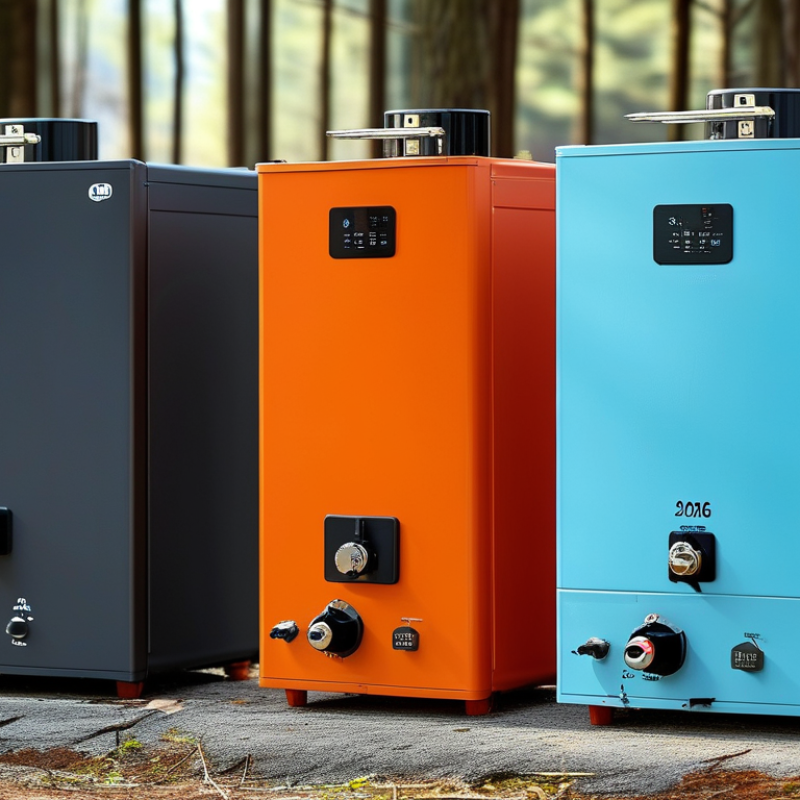
Mini water heaters provide hot water close to the point of use, reducing waiting time and pipe heat loss. The main types are compact storage heaters and tankless electric heaters. Storage models keep a small volume hot, while tankless models heat water only when needed. A third option, the heat-pump mini heater, can reduce energy use but usually needs more space and careful installation.
Key specifications deserve practical checking. Confirm voltage, wattage, tank capacity, heating time, maximum flow, and temperature range. A 10-liter tank may suit handwashing, but not a long shower. Tankless performance also depends on inlet temperature and electrical capacity. A unit rated for high flow may disappoint in a cold climate.
Safety features should include dry-heating protection, over-temperature control, pressure relief, leakage protection, and clear maintenance access. Regional electrical certifications and plug requirements must match the destination market.
Common applications include bathroom basins, kitchen sinks, small offices, guest rooms, cabins, and mobile facilities. For global sourcing, compare actual test data rather than catalog claims. Ask for wiring diagrams, installation instructions, spare-part lists, and water-pressure limits.
Stainless steel tanks can resist corrosion, but material grade and weld quality still matter. Compact products are not automatically easy to install. I have seen buyers overlook cable size and drainage space. That mistake can increase costs after delivery. Performance, safety, serviceability, and local compatibility should be reviewed together.
For global sourcing, define the heating duty before comparing mini water heaters. The U.S. Department of Energy reports that water heating uses about 18% of household energy. That figure changes with climate, family size, and usage patterns. A hand-wash basin may need 2–3 L/min, while a shower can require 6–10 L/min. Do not size from the outlet label alone.
Use the temperature-rise method: required power in kilowatts is approximately 0.0698 × flow in litres per minute × temperature rise in °C. At 4 L/min and a 25°C rise, the load is about 7 kW. A colder inlet increases the demand sharply.
The International Energy Agency also identifies water heating as a major efficiency opportunity in buildings, so standby loss and control accuracy deserve equal attention. Small errors here become large operating costs.
Set a realistic outlet target. Many hand-washing applications work near 38–45°C, while higher settings may increase scalding risk. WHO guidance stresses temperature control and safe hot-water management, but local public-health rules still require verification. Specify voltage, frequency, inlet pressure, flow stability, and seasonal inlet temperature. Ask suppliers for measured performance, not only rated power. Laboratory values can disappoint in winter. I have seen theoretical sizing fail when a filter became partially blocked; maintenance access should be part of the specification.
Energy efficiency should be measured, not assumed. The IEA reports that buildings consumed about 30% of global energy in 2022. Water heating remains a practical efficiency target. Compare standby loss, heating time, rated power, and usable hot-water volume. For electric units, request test results under applicable IEC methods. In some markets, the U.S. Department of Energy uses Uniform Energy Factor to compare water-heater performance. Do not compare figures from different test conditions. That mistake is common.
Safety needs physical evidence. Check for thermal cut-off, dry-fire protection, leakage detection, and pressure relief. Confirm compatibility with local residual-current protection systems. Review insulation around live components and the enclosure’s ingress rating. IEC 60335-2-21 and IEC 60335-2-35 provide relevant safety requirements for storage and instantaneous heaters. Certification alone is not enough. Ask for current reports, factory inspection records, and corrective-action history. A missing test detail deserves attention.
Quality appears in repeated production. Request incoming-material records, heating-element specifications, weld inspection results, and end-of-line electrical tests. Sample units from different production batches. Measure temperature stability after repeated cycles. Inspect connectors, seals, and cable strain relief by hand. ISO 9001 supports process control, but it does not guarantee every unit. That distinction matters. The Global Status Report for Buildings and Construction 2023 states that buildings produced about 26% of global energy-related emissions in 2022. Small heaters still deserve disciplined sourcing. No supplier is flawless. Leave room for independent testing.
2026 How to Choose a Mini Water Heater for Global Sourcing
Supplier evaluation should begin with evidence, not polished catalogs. Request the factory address, quality manual, and recent inspection records. Review incoming material checks and final safety tests. A live video audit can reveal weak traceability. I once found identical product photos used for different internal designs. That mistake changed my sourcing checklist permanently.
Check each certification’s scope, model number, voltage, and target market. A certificate for one version may not cover a customized version. Ask for current test reports covering electrical safety, temperature control, leakage protection, and electromagnetic compatibility. Verify applicable requirements such as CE, UKCA, or other regional schemes with a qualified compliance professional. Requirements can change. Do not rely on a supplier’s verbal promise. Keep approved drawings, component lists, labels, manuals, and test records under revision control.
Tips: Compare at least three suppliers. Request a sample before mass production. Test it with the destination country’s voltage and plug configuration. Confirm packaging, spare parts, warranty handling, and product traceability. For private-label customization, approve every label and warning before printing. A low price can hide expensive rework. Also, no audit is perfect; repeat checks when the design, factory, or production location changes.
| Evaluation Area | Key Dimension | Practical 2026 Benchmark | Required Evidence | Global Sourcing Relevance |
|---|---|---|---|---|
| Product Fit | Product type | Storage mini heaters are commonly offered in approximately 5–15 L capacities; instantaneous models are selected by flow rate and electrical power rather than tank volume. | Technical datasheet, internal tank drawing, rated capacity and operating principle. | Choose storage models for point-of-use sinks and low, predictable demand; choose instantaneous models only when the site supply can support the required load. |
| Capacity and recovery | Typical small storage configurations include 5 L, 8 L, 10 L and 15 L. Actual recovery depends on wattage, inlet temperature and thermostat setting. | Capacity tolerance, heating-time test method, temperature-rise data and pressure-test records. | Compare suppliers using the same inlet temperature, setpoint and power rating; do not compare capacity alone. | |
| Voltage, frequency and power | Common market configurations include 110–120 V / 60 Hz and 220–240 V / 50 Hz. Small units often use approximately 1.5–3.5 kW, subject to the design and local circuit limits. | Rated label, wiring diagram, power-consumption test report and plug or hard-wiring specification. | A 3.0 kW load at 230 V is approximately 13.0 A; a 1.5 kW load at 120 V is approximately 12.5 A. Verify the local circuit, breaker and installation code. | |
| Installation orientation | Confirm whether the unit is designed for over-sink, under-sink, vertical, horizontal or universal installation. Orientation must match the tank and safety-valve design. | Installation manual, dimensional drawing, mounting template and orientation-specific test records. | A model suitable for one orientation should not be marketed for another without documented engineering approval. | |
| Ingress protection | Select the IP rating according to the installation environment. The rating must be tested and declared under IEC 60529; a higher number is not automatically appropriate for every installation. | IP test report, enclosure construction details and installation-zone instructions. | Bathroom and wet-area use may be governed by additional national wiring rules beyond the product IP rating. | |
| Safety and Performance | Electrical safety | The design should address electric-shock protection, abnormal operation, leakage current, grounding or double insulation, temperature rise and mechanical strength. | Applicable safety test report, circuit diagram, grounding continuity results and production test procedure. | For many household water heaters, the relevant IEC family includes IEC 60335-2-21 for storage water heaters or IEC 60335-2-35 for instantaneous water heaters, together with the applicable general requirements. |
| Pressure protection | A storage unit should include a suitable temperature and pressure control strategy, including a safety or relief valve where required by the design and destination market. | Hydrostatic pressure test, relief-valve specification, activation data and installation instructions. | The relief system must not be blocked, capped or replaced with an unapproved component. Local plumbing rules may specify discharge routing. | |
| Thermal controls | Use independent temperature control and over-temperature protection where required by the applicable standard. Verify the delivered water temperature and reset behavior. | Thermostat calibration records, cut-off test results and sample-based temperature verification. | Temperature settings should balance scald prevention, hygiene requirements, energy use and local regulations. | |
| Leakage and durability | Evaluate tank leakage, weld quality, connections, thermal cycling, corrosion resistance and insulation performance. | 100% water-leak test or documented sampling plan, pressure-cycle data, coating or lining specification and insulation test results. | Request failure-rate data by production lot and define corrective-action timing in the supply agreement. | |
| Energy performance | Assess standby loss, heating efficiency, insulation thickness, control accuracy and eco or scheduling functions where applicable. | Test conditions, energy-consumption results and destination-market energy-label documentation where required. | Energy requirements differ by product category and jurisdiction; confirm the exact scope before using an efficiency claim. | |
| Supplier Evaluation | Manufacturing capability | Prioritize suppliers with controlled tank fabrication, electrical assembly, pressure testing, final inspection and traceable production records. | Factory audit, process flow, equipment list, calibration records and recent internal audit reports. | A trading intermediary may be acceptable, but the legal manufacturer, production site and compliance-responsible party must be identified. |
| Quality management | A documented quality system with incoming inspection, in-process controls, final inspection, nonconformance handling and corrective action is preferred. | Quality certificate scope, control plan, inspection records, complaint data and corrective-action samples. | Check whether any management-system certificate covers the actual production site and product-related processes. | |
| Traceability | Each unit should be traceable to a production date or lot, electrical configuration, key components and inspection status. | Serial-number format, lot records, component supplier list and sample traceability exercise. | Traceability reduces recall scope and supports investigations when products are sold across multiple markets. | |
| Component control | Control heating elements, thermostats, thermal cut-outs, relief valves, cords, plugs, seals, insulation and tank coatings as safety-critical components. | Approved component list, change-control procedure, incoming inspection criteria and component certificates. | Require written approval before substituting safety-critical parts after certification or sample approval. | |
| Capacity and lead time | Evaluate pilot-order capacity, normal monthly output, component availability, tooling lead time and peak-season constraints rather than relying only on quoted delivery days. | Production plan, confirmed bill of materials, capacity statement and historical on-time-delivery data. | Separate sample lead time, first production lead time and repeat-order lead time in the commercial agreement. | |
| Certifications and Compliance | European Union market | Products within scope generally require CE conformity assessment and a Declaration of Conformity. Applicable requirements may include electrical safety, EMC, RoHS and other product-specific legislation. | EU Declaration of Conformity, technical file index, applicable test reports, product label and user instructions. | CE is a regulatory conformity marking, not a universal quality mark. Verify the exact directives, regulations and harmonized standards for the model. |
| United Kingdom market | Determine whether UKCA marking, UK electrical-safety rules, EMC rules, RoHS requirements and importer or responsible-person details apply to the product and sales route. | UK Declaration of Conformity where applicable, technical documentation, label artwork and UK supply-chain contact details. | Do not assume EU documentation automatically satisfies every current UK obligation; confirm the rules in force at the time of shipment. | |
| North American market | Electrical products may require acceptance by the applicable authority having jurisdiction. NRTL certification, such as certification to relevant US or Canadian standards, is commonly requested for many installations. | Valid certification listing, model-number match, construction review, installation manual and required markings. | Confirm whether the destination requires a field label, recognized certification body, local inspection or plumbing approval. | |
| International test framework | The IEC CB Scheme can support acceptance discussions in participating markets, but a CB report does not automatically replace every national approval. | CB test certificate, CB test report, national deviations and model-number consistency. | Use the report as a technical foundation, then confirm national differences, registration and marking requirements. | |
| Materials and chemical restrictions | For relevant markets, review restricted substances, material declarations, supplier declarations and evidence for coatings, plastics, cables and electronic components. | RoHS evidence where applicable, REACH substance information for the EU supply chain and a controlled materials declaration. | Compliance must cover the complete delivered configuration, including packaging, accessories and replacement parts where required. | |
| Water-contact materials | For potable-water applications, assess tank lining, fittings, seals, hoses and other wetted parts for the destination’s material and leaching requirements. | Material composition, migration or extraction test data and applicable potable-water approval documentation. | NSF/ANSI 61 and NSF/ANSI/CAN 372 may be relevant in North American applications, but acceptance depends on the product, component and jurisdiction. | |
| Customization | Electrical configuration | Customize voltage, frequency, rated power, cord length, plug type, terminal arrangement and grounding method only after confirming the target-market standard. | Approved electrical schematic, plug certification, sample label and country-specific installation instructions. | Changing voltage, power or heating elements may invalidate test reports and require a new certification review. |
| Hydraulic connections | Specify inlet and outlet thread type, nominal size, connection material, operating pressure, relief-valve interface and required accessories. | Dimensioned connection drawing, pressure rating, compatibility statement and accessory list. | Thread standards and plumbing practices differ by market; verify compatibility with local fittings and service parts. | |
| User interface and language | Offer market-appropriate temperature controls, symbols, warnings, display units, labels and manuals in the required languages. | Final artwork approval, translated manual, warning-label review and packaging proof. | The importer remains exposed if instructions, warnings or electrical information are incomplete or inaccurate. | |
| Appearance and packaging | Define enclosure material, finish, dimensions, mounting hardware, carton strength, palletization and recyclable packaging content. | Approved golden sample, packaging drop-test criteria, carton specification and shipping-mark artwork. | Packaging changes can affect transport damage, labeling obligations, extended producer responsibility and total landed cost. | |
| Change management | Set a formal approval process for changes to components, software, tooling, factory, materials, packaging or critical production steps. | Engineering-change notice template, revision-controlled bill of materials and re-test decision matrix. | Require notification before shipment and define when a change triggers sample approval or certification reassessment. | |
| Commercial and Risk Control | Total landed cost | Compare unit price, tooling, testing, certification, packaging, freight, duties, inspection, warranty reserve and compliance-maintenance costs. | Itemized quotation, Incoterms, tariff classification proposal, packaging dimensions and cost assumptions. | A low factory price can become uneconomic if destination-market certification, oversized packaging or after-sales costs are excluded. |
| Warranty and service | Define warranty duration, covered parts, exclusions, response time, spare-parts availability and remedies for repeated failures. | Written warranty policy, spare-parts price list, service manual and failure-return procedure. | Tank, heating element, thermostat and electronic-control failures may require different service rules; specify them separately. | |
| Inspection plan | Use pre-production approval, first-article inspection, in-process checks and pre-shipment inspection with measurable acceptance criteria. | Approved inspection standard, sampling level, defect classification, test equipment list and inspection report format. | Critical defects should include electrical-safety, pressure, leakage, overheating, incorrect rating and missing safety instructions. | |
| Documentation package | The shipment file should include datasheet, drawings, bill of materials, test reports, declarations, labels, manuals, packing list and traceability records. | Document checklist with revision numbers and model-specific references. | Do not accept generic reports that do not identify the exact model, electrical configuration and production site. | |
| Import responsibility | Identify the manufacturer, importer, authorized representative or responsible economic operator required by the destination market. | Legal-entity information, compliance contact, label address and product-liability insurance details where appropriate. | Importer obligations can include technical-file retention, incident reporting, product registration, corrective action and market-surveillance cooperation. |
Global sourcing a mini water heater requires more than comparing supplier quotations. Start with the landed cost, not the factory price. Add testing, sample fees, export packing, freight, insurance, import duties, customs handling, and inland delivery. A unit priced at 45 dollars can approach 80 dollars after these charges.
Shipping risk needs a separate calculation. Confirm the required voltage, frequency, plug type, tank material, and water-pressure rating for each destination. One wrong specification can create expensive returns. Use moisture-resistant cartons, corner protection, and clear handling marks. Ask for loading photos and inspect a production sample before shipment. Port congestion can delay seasonal sales. Cargo insurance may reduce financial exposure, but it cannot repair lost customer trust.
Long-term value depends on energy use, replacement parts, warranty handling, and expected service life. Request measured heating performance, failure-rate records, and spare-part pricing. A cheaper model may consume more electricity every day. That difference can exceed the initial saving within two years. I have seen sourcing spreadsheets ignore technician travel and damaged-return freight. That was a costly mistake. Build three scenarios: normal delivery, delayed delivery, and defective-batch replacement. Leave room for exchange-rate changes and uncertain duty assessments. Then compare total ownership cost over five years, using documented test results and written supplier commitments. Reliable decisions need evidence, not attractive promises.
Compact storage heaters keep a small tank hot. Tankless electric models heat water only when needed. Heat-pump models may use less energy but need more space and careful installation.
A 10-liter tank may suit handwashing at a basin. It may not support a long shower. Match capacity with users, flow, and expected usage.
Check voltage, wattage, tank capacity, heating time, maximum flow, and temperature range. Also confirm inlet temperature and available electrical capacity.
Cold inlet water needs more heating power. A unit rated for high flow may struggle in a cold climate. Catalog numbers can look better than real performance.
Look for dry-heating protection, over-temperature control, pressure relief, and leakage protection. Clear maintenance access also matters. Safety is not decorative.
Typical locations include bathroom basins, kitchen sinks, small offices, guest rooms, cabins, and mobile facilities. They work best near the usage point.
Check cable size, drainage space, water-pressure limits, wiring diagrams, and plug requirements. Compact products are not automatically simple to install. I have seen this mistake increase delivery costs.
Request the factory address, quality manual, inspection records, and recent safety test results. A live video audit can reveal weak traceability. Polished catalogs are not proof.
Check the certificate scope, model number, voltage, and target market. A customized version may need separate testing. Keep approved drawings, labels, manuals, and component lists under revision control.
Request a sample and test it with the destination market’s voltage and plug configuration. Compare actual test data from several suppliers. Repeat checks after design or factory changes. No audit is perfect.
Choosing the right Mini Water Heater for global sourcing requires a clear understanding of product types, heating methods, installation styles, and typical applications. Buyers should first define the required heating capacity, water flow rate, inlet temperature, outlet temperature, and usage frequency. These factors help determine whether a compact instant heater or a small storage unit is more suitable for homes, offices, hospitality areas, or specialized facilities.
A thorough comparison should also cover energy efficiency, temperature control, overload protection, leakage prevention, insulation, materials, and overall product quality. When evaluating suppliers, check manufacturing experience, certifications, testing procedures, customization capabilities, packaging standards, and compliance with destination-market requirements. Finally, calculate the complete sourcing cost, including product price, tooling, inspection, freight, insurance, duties, installation, maintenance, and possible shipping risks. A reliable supplier and well-designed Mini Water Heater can provide better long-term value through stable performance, lower energy use, safer operation, and reduced replacement costs.

Huayida